The MagLab is funded by the National Science Foundation and the State of Florida.
The MagLab is funded by the National Science Foundation and the State of Florida.
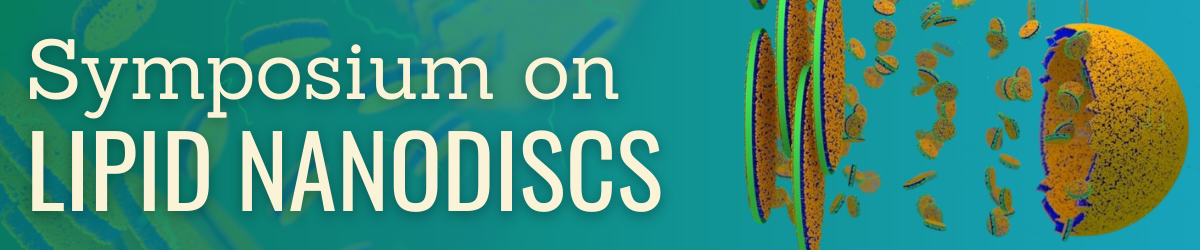
The Symposium on Lipid Nanodiscs: Applications in Structural Biology and Drug Delivery will take place on April 30-May 01, 2026 in Tallahassee, Florida.
Symposium on Lipid Nanodiscs: Applications in Structural Biology and Drug Delivery
Membrane proteins play central roles in cellular signaling, transport, and metabolism, and represent a major class of therapeutic targets. However, their intrinsic dependence on lipid bilayers has historically posed significant challenges for biochemical/biophysical characterization, high-resolution structural analysis, and translational applications. Lipid nanodiscs have emerged as a powerful and versatile platform to address these challenges, offering a native-like, soluble, and tunable membrane environment for membrane proteins.
This symposium will highlight recent advances in lipid nanodisc technology and explore their expanding applications in structural biology and drug delivery. Nanodiscs are self-assembled nanoscale lipid bilayers stabilized by amphipathic scaffold proteins, peptides, or synthetic polymers. They enable the reconstitution of membrane proteins in well-defined lipid environments. This has facilitated breakthroughs in cryo-electron microscopy, NMR spectroscopy, X-ray scattering, and other biophysical methods, allowing researchers to capture membrane proteins in functionally relevant conformational states.
A key focus of the symposium will be the use of nanodiscs in structural studies of receptors, ion channels, transporters, and multiprotein complexes. Speakers will discuss how lipid composition, bilayer size, and scaffold chemistry influence protein stability, dynamics, and activity, as well as how nanodiscs compare with alternative membrane mimetics such as detergents, liposomes, and bicelles. Emerging hybrid systems and next-generation nanodisc designs will also be presented, with emphasis on their compatibility with high-resolution and time-resolved techniques.
In addition to their impact on fundamental structural biology, lipid nanodiscs are gaining importance as platforms for drug discovery and delivery. Their ability to incorporate hydrophobic drugs, present membrane proteins in native conformations for ligand screening, and interface with biological systems makes them attractive tools for translational research. The symposium will feature discussions on nanodiscs as carriers for small molecules, peptides, and biologics, as well as their potential in targeted delivery.
By bringing together experts in biomedical engineering, biophysics, structural biology, chemistry, and pharmaceutical sciences, this symposium aims to foster interdisciplinary dialogue and collaboration. Participants will gain insight into the current state of the field, technical challenges, and future directions for lipid nanodiscs as enabling tools at the interface of basic research and therapeutic innovation.

Loren Andreas
Max Planck Institute, Gottingen, Germany

Anirban Banerjee
NIH

Huan Bao
University of Virginia
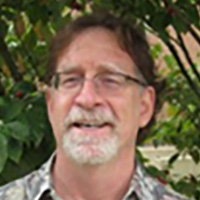
Bruce Barry
University of Tennessee, Knoxville
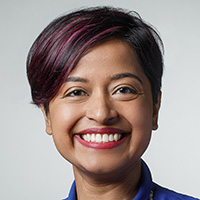
Moitrayee Bhattacharyya
Yale School of Medicine

Wayland Cheng
WashU Medicine

Aditi Das
Georgia Institute of Technology

Debasis Das
Indian Institute of Science, India
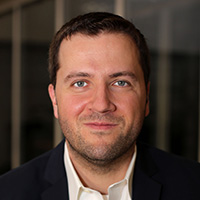
Matthew Eddy
University of Florida

Clemens Glaubitz
Goethe University Frankfurt, Germany

Kallie Gupta
Yale School of Medicine
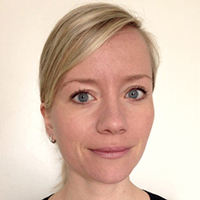
Birgit Habenstein
CNRS, Bordeaux, France
John Hackett
Florida International University
Franz Hagn
Technical University of Munich, Germany
Yan-Yan Hu
Florida State University

Jiansen Jiang
NIH
John Katsaras
Oak Ridge National Lab
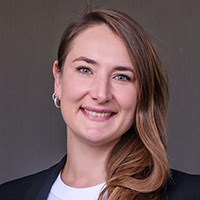
Gestel Kuyler
Stellenbosch University, South Africa
Hongjun Liang
Texas Tech University
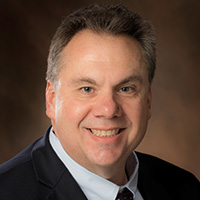
Gary Lorigan
Miami University
Michael Marty
University of Texas Austin
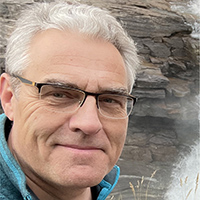
Michael Overduin
University of Alberta, Canada

Kimmo Rantalainen
Scripps Research Institute, San Diego
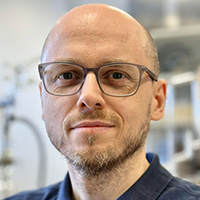
Vladimír Raus
Czech Academy of Sciences, Czech Republic

Brandon Ruotolo
University of Michigan, Ann Arbor

Rituparna Samanta
University of South Florida
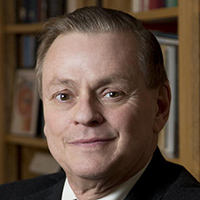
Steven Sligar
University of Illinois Urbana-Champaign

Birgit Strodel
Forschungszentrum Jülich, Germany

Sankaran Thai Thayumanavan
UMass Amherst
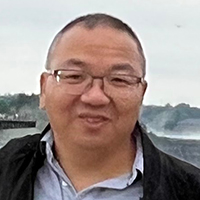
Libin Ye
University of South Florida

Manuela Zoonens
C.N.R.S., Université Paris, France
| Time | Activity |
|---|---|
| 8:30 AM | Opening Remarks |
| 8:35-10:30 AM | Session 1 |
| 10:30-10:40 AM | Coffee Break |
| 10:40 AM - 12:30 PM | Session 2 |
| 12:30 - 1:30 PM | Lunch Break & MagLab Tour |
| 1:30 - 3:30 PM | Session 3 |
| 3:30 - 4:00 PM | Coffee Break & MagLab Tour |
| 4:00 - 5:30 PM | Session 4 |
| 5:30 - 6:00 PM | Round Table Discussion |
| 6:00 - 7:30 PM | Dinner & Poster Session |
| Time | Activity |
|---|---|
| 8:30 - 10:30 AM | Session 5 |
| 10:30 - 10:40 AM | Coffee Break |
| 10:40 AM - 12:30 PM | Session 6 |
| 12:30 - 1:30 PM | Lunch Break |
| 1:30 - 3:30 PM | Session 7 |
| 3:30 - 4:00 PM | Coffee Break |
Abstracts should be submitted no later than April 15, 2026. Abstracts should use the template linked below and must be submitted via e-mail to aramamoorthy@fsu.edu.
Download Symposium on Lipid Nanodiscs Abstract Template [MS Word]
The registration fee covers the meals, coffee and snack for both days.
The only facility of its kind in the United States, the National High Magnetic Field Laboratory (less formally known as the Magnet Lab) is the largest and highest-powered magnet laboratory in the world, headquartered in a sprawling 370,000-square-foot complex near Florida State University in Tallahassee. The lab also includes sites at the Los Alamos National Laboratory in New Mexico and the University of Florida in Gainesville. Together these three institutions operate the lab, collaborating in a unique, interdisciplinary way to advance basic science, engineering and technology in the 21st century.
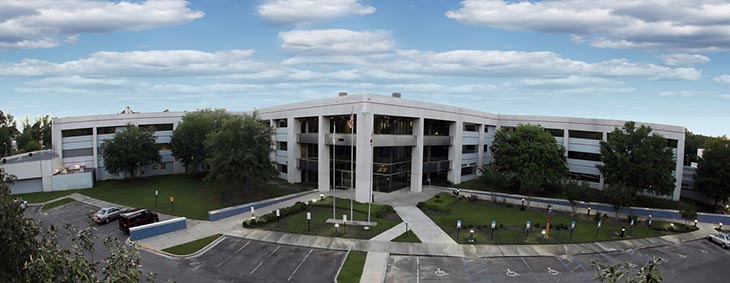
The Magnet Lab
Established by the National Science Foundation in 1990, the lab is a national resource open to both curious visitors and world-renowned scientists. Centralizing the country's greatest magnet-related tools, resources and expertise is not only efficient and cost-effective, but also encourages fruitful, collaborative research at the highest level. Every year, more than 900 visiting scientists and engineers from across the world conduct experiments using our state-of-the-art equipment. Our magnets are far larger, far more powerful and far more complex than the everyday magnets most people are familiar with. Many were designed, developed and built by our magnet engineering and design team, widely recognized as the finest in the world.
The National High Magnetic Field Laboratory offers the Dirac Postdoctoral Fellowship, a two-year (renewable for an additional year) postdoctoral fellowship in condensed matter theory. The program is designed for Ph.D.'s with a research interest in any of the condensed matter areas represented by the three sites of the National MagLab. In particular, this year, we are looking for applicants interested in any of the following research topics: unconventional superconductivity, strongly correlated electron systems, magnetism, 2D moiré/graphene/TMD systems, and plasmonics.
Please refer to Travel to Tallahassee page for more information.
Please refer to Visa Information page for more information.
Ayyalusamy Ramamoorthy (Rams), MagLab & FSU
Last modified on 13 March 2026